My Favorite Drawing

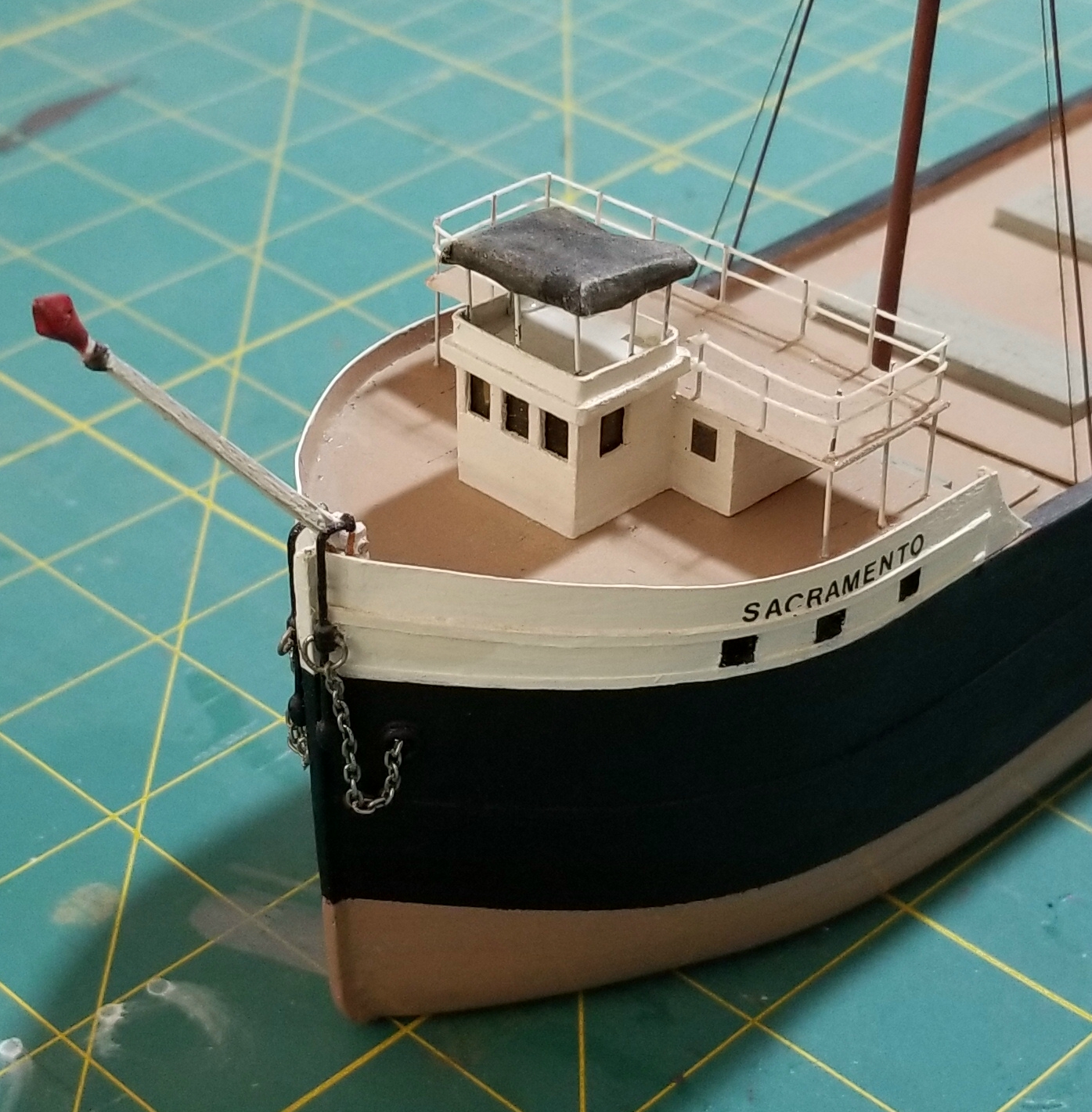
With the posting of my photo of my R/C model of the Davidson steamer SACRAMENTO the question came up as to what plans or drawings I used to make such replicas of old lakeboats. The answer was that I often draw my own plans, but sometimes I use what others have drawn- such as in the case of the SACRAMENTO. In that case I used the actual Davidson Shipyard plans from an 1898 copy of Marine Engineering... seen here.


This drawing, provided to me by my boat-chasing pal D.J. Story, is actually that of the THOMAS CRANAGE, which is of the same class as the SCRAMENTO. The CRANAGE was wrecked on Georgian Bay in 1911 and her entire saga, which corrected 80+ years of bad history by the way, is in my book "Mysteries and Histories."


Since there are almost zero documents surviving from the Davidson yard- I figured this was a great drawing to base the model upon. In fact it was so great that it is actually on my personal business card.


The drawing itself allows a close look into how these steamers were laid out.


Captain Davidson built some of the largest wooden vessels in the world and there has always been some mystery as to how they were constructed.


 A key to this secret appears to be the lattice of steel strapping and cables that criss-cross within and outside of the hull timbers. 


They provided strength and support for the wood timbers that made up the basic hull. Today this can be easily seen on the remains of the schooner barge and steamer that lay on the west bank of the Saginaw River at Bay City where the Davidson Shipyard was located. Abandon in 1929 with the onset of the Depression these wooden ships were left to rot.


Eventually they were set upon by what, in my opinion, was a serial arsonist who set fire to wooden boats left abandon along the river in the late 1940s and 1950s. Each was burned to the waterline so you have to wait for when the river water is quite low in order to see the wrecks.


Each vessel was double hulled and the sides were bolted together with the bolts also running through the straps- as seen here.

Get a signed and personalized copy of Wes' books HERE!


In case you're wondering the above photos are of the  giant schooner barge MONTEZUMA.


 The MONTEZUMA in better days.


Get an autographed and personalized copy of Wes' books HERE


Resting next to the MONTEZUMA is the steamer SHENANDOAH 


Look closely and you can see her two boilers peeking above the murky water.


Her strapping is also visible.

Okay... to give you a better feeling for what you are seeing...

When the vessel burned, the decking under her boilers burned away. That allowed the boilers to simply drop down to the position they are in now as illustrated by the drawing.


Meanwhile, her sister the SACRAMENTO was not free of arson- she too soon was set upon by the firebug. She burned in the drydock where she had been abandon in 1929.


The arsonist burned her to her bilge.


MONTEZUMA was also torched and burned to the waterline.

There was one other act of arson that, from a historian's standpoint, was even more vulgar. The story goes that after the wrecks had lingered on the riverbank for several decades the city was out to clean up the eye-sore and thus decided to have the owner of the property pay to have the problem removed. A kin of James Davidson decided to obliterate all ties and evidence that would prove that person's ownership of the property. So it was ordered that every scrap of paper, every drawing, every record was taken out into the yard, doused with kerosene and burned. No records meant no proof of ownership and the property was a ward of the city. This is why there are no records as to how exactly James Davidson built his amazing lakeboats.


Today the Davidson yard is an amazing park and river walk. When the water is very you can stand on a large deck that is constructed over the MONTEZUMA and look at the wrecks. 


If the water is really, really low- you can touch them. GRAMPIAN was mostly removed by the city. The SACRAMENTO was buried. Yet the MONTEZUMA, SHENANDOAH, MATANZAS and GRANADA remain.

The yard circa 1946

The Davidson yard today.

Get a signed and personalized copy of Wes' books HERE!


Brought my model boats out... after a decade

So... what do author's/airline transport pilots do for relaxation? Well... since 1979 I've built R/C model lakeboats. The next question is; what does that same person, only with AD/HD, do for relaxation? The answer is; a whole lotta boats!


I was once in a conversation with a psychologist who casually asked what I did to relax? I replied that I worked on my radio controlled model boats. She said, "That's nice..." and then asked how many I had? I replied, "58." There was a moment of silence and she asked, "Don't you think that's a little unusual?" 


Not for me.


The majority of my current fleet


My fleet dwindled down to 42 lakeboats by the time we bought our house by the bay in late 1999. Shortly there after we had our first child and I quickly found that finely detailed model boats and little kids do NOT go together well. By 2008 we had two kids and needed a house with more room- so we had the old place bulldozed (why give up a perfect location eh?) and a new, much bigger one built. In the process of moving out I carefully packed all of my boats into assorted boxes and handled them personally. When we moved into the new place I stored all of the boxed boats as far back in our storage wing as I could get them. I figured they'd be safe there until the kids got older... I was right. In 2018, a full decade later I transferred the production of my model rocket company to another company and thus cleared out all of the parts needed for that process. This left a lot of open space in my work area... the boats came back out! For the record, my wife LIKES the look of the boats as opposed to the clutter of model rocket parts and boxes. (Japanese people are like that... they loathe disorder)


Get Wes' books autographed and personalized HERE!


I was happy to see that time had been good to the fleet while it was in storage. Sure there were a few dings, but only two were damaged to a great extent. The bow rigging of the WILLIAM CLAY FORD had been smashed, as had the stern quarter of the SACRAMENTO. The SACRAMENTO was the worst off and required some major surgery. Additionally her pilothouse canopy had been smashed and 2 of her 3 spars had their peak snapped off.


Her bow canopy now fully restored


Today, she's looking good again and ready to sail again some day... more likely to gather dust on the shelf, but at least I feel better. 


Note the dime in the photo for scale.


What's interesting about my model of the SACRAMENTO is that her two lifeboats are carved from wood from the actual vessel! 


YES... several years ago, Great Lakes historian Don Comtois showed me that he had in storage some knees from the old boat that he had rescued before the city of Bay City bulldozed and buried the remains of the historic vessel in the mid 1970s. 


Remains of the SACRAMENTO before she was bulldozed by the city. Yeah, in the mid 1970s the city politicians were really big on preserving their maritime history... not.


He gave me a whole knee and from it I had several pens made (one of which I gave to Don, of course). Yet the wood was, after all of those years of exposure, so fragile that it was more difficult to mill than balsa wood. From the remaining chunks I carved the lifeboats if the R/C model of the SACRAMENTO.


Thus... the original steamer lives on.


Now- it is on to repairing and finishing the rest of the fleet... as well as writing my next book of course.

Get Wes's Books HERE


Book 18 is here!


Get an autographed and personalized copy HERE!

Book 18 from Avery is on Amazon


My 18th Great Lakes book (24th book overall) is now here for sale!

THE WHAT IT'S LIKE TO BE AN AUTHOR DEPARTMENT

Common reader's question: "You wrote this?" (flips open the book) "Okay... what's the first sentence in the second chapter?"

My answer: "I don't freakin' remember."


Here's the deal- I don't write that way and my cheeseball brain doesn't function like that. Yet, some people think that's a good test of if or not you actually composed the text.

The reality is that when I start a story, I actually move into it. I try and put myself back in that place and time and look around. With the help of some modern resources I take myself back that that specific time and date and see what life was like. Then, once I get orientated, I add in all of the tastes and smells and sensations that the people would have experienced- apply them to the facts and write the story. If I feel like I'm "there" then my readers will feel like they are there as well.

Then I leave it and move onto the next story. The story previous is thus zipped into my brain's cluttered memory bank and eventually over-written by new data. Occasionally I'll open up one of my previous books and upon reading a paragraph or two I say to myself, "Did I write that? Dang... that's pretty good." Frankly I don't remember writing it. Additionally, on a few occasions I'll come across a good prospect event for a shipwreck story, but think that it sounds a bit too familiar. After a check I find that, nope- I already wrote it.

Thus you have my world as a writer. It is not neat rows of files in alpha-numeric order, but rather it is a full-blown mess of strewn-about papers, ideas, drawings, maps and stuff I wanna write about... if I haven't already. If you get one of my books and wanna quiz me on it, well... I don't take quizzes... ever. On the other hand if you wanna take a story and wade through the reference material and thought processes needed to construct it- I'll be happy to join you in the process. Hope yer' not busy for about a month.

A random book signing at Whitefish Point

Overall, I love my readers- even the ones who try and quiz me. Although everyone should keep in mind that my most recent book 18 months to hit the stores after I finished it- so I'm working years ahead of what you are holding in your hand when you try and quiz me.

What's the first line in the second chapter?

Damned if I remember- I'm working in 1882 right now.

Get your autographed and personalized book from Wes HERE!


My 17th Shipwreck Book!


My 17th Great Lakes title is in from the printer!


Avery now has my latest book on their web site! Order yours today!

Also check out this book of mine...

SHALLOW WATER WRECKS- CONSUELO


FIVE DAYS OF HARD LABOR


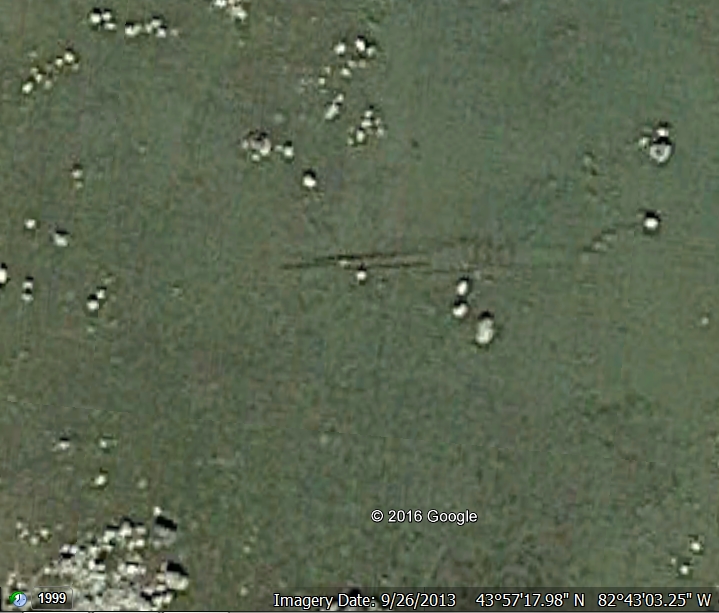
Some of these shallow water wrecks require a good deal of keen-eyed searching in order to find them. When you do it is often only by speculation that you can identify their remains. In the case of the CONSUELO, however, my search required neither of those. I had a few minutes of spare time (a very rare circumstance in my case) between my daily author tasks and picking my kids up at the school bus stop; about 7 minutes to be exact. Being a "creative ADHD" as they shrinks say, I just cannot let time waste away and so I decided to fire up my laptop, call up Google Earth and do some shallow water wreck scanning. I randomly picked an area just north of Port Hope, Michigan on the Lake Huron shore and setting my target on that area and setting the clock back 2013, I zoomed in. THIS is the screen-grab of what I saw as I zoomed in!

Of course it was surprising and exciting and of course I had just enough time to screen-grab and save the image. It would be a couple of days before I could research it. That job would be almost as easy.

Looking at my "list" of Port Hope wrecks I came across one that had a star... the schooner CONSUELO. When I went to my files of the annual reports of the U.S. Life-Saving service for the date of her loss I saw that not only was the whole story there, but I had drawn five stars in the margin and a chevron with the note "L.U." Two and a half decades ago, when I was compiling Xerox copies of the USLSS reports at the USNA's Nimitz Library in Annapolis I would carry a file for a given year along with me as I was commuting to my job as an airline pilot. On those long flights I'd read the reports and mark areas of interest. Two chevrons was my short hand for something good and "L.U." stood for "Look Up" meaning get the details of this vessel's history perhaps for use in a future book. Five stars meant "really good stuff."

(Take note of the big boulder sticking through the beams.)


Click HERE and make Wes
autograph and personalize
your book before he
sends it to you!


The wreck's keelson and beams are located just over 1,200 feet from shore and 8.26 miles north, northwest of the Sand Beach (now Harbor Beach) 1888 Life-Saving station. The two-masted schooner was 103 feet long and loaded with lumber from False Presque Isle to Detroit under the command of Captain Seeley. On the evening of November 9th, 1887 a southeast gale was blowing and the schooner was tacking against the wind. She had sprung a leak in the storm and while running for the safety of Port Hope found herself too close to the shore and the boulders as she ran aground. At 2 o'clock the following afternoon a telegram was sent from Port Hope to the Sand Beach life-savers stating that the vessel was in peril and that a steam tug had been summoned from Detroit to help free her. That tug would pick up the life-savers and their life-boat and tow them to the scene of the stranding. They arrived at 7:30 in the evening. It was decided that nothing could be done with the CONSUELO until daylight. Then, at 8:30 in the evening, the waves began to break over the boat and her crew of six grabbed their belongings and asked the life-savers row them to dry land. For the next four days the lifesavers worked at lightering her cargo of lumber in an effort to re-float her. It was no use as an inspection of her hull showed that a huge boulder was jutting through her bottom. All of her lumber was dumped overboard and collected by the life-savers and turned over to the owners. After five days of hard labor by the life-savers the CONSUELO was left to the lake which rapidly took her apart. Built in 1851, her old timbers were easy for Lake Huron to feast upon. The keeper of the Sand Beach life-saving station estimated that the wreck was "about 9 miles northwest of the station." That is almost exactly where these remains are located.

Yet there is another object...


In using Google Earth you can look carefully and spot this second object close to shore and 1,154 feet from the wreck site. 


Click HERE to get a book directly from Wes autographed and personalized


The object appears to be some sort of wreck piece, but without actually visiting the site and checking it out, it's impossible to say for sure that this is a part of a shipwreck. However, considering that the USLSS places the CONSUELO at this location, nearly exactly, I'd say we're pretty safe in saying that the remains out on the shoal is probably her- especially with the huge boulder stuck in her ribs.


SHALLOW WATER WRECKS: MONOHANSETT

MONOHANSETT'S FINAL RESTING PLACE 


Originally launched as the double decked freighter IRA H. OWEN in 1872 and later renamed MONOHANSETT on January 22nd 1882, this 160 foot long wooden steamer was a workhorse on a slim budget. Manned by a crew of only 12, which was legal in 1907, the boat was hauling coal when in the vicinity of Thunder Bay.


She suffered the fate of many a wooden vessel when she caught fire on November 23rd, 1907. Her captain managed to get her near Thunder Bay Island and the life-saving station before her crew abandon the vessel with nothing more than the cloths that they were wearing. No one was killed in the accident, although two of her crew suffered some minor burns.


The boat's remains rest today just off the southern tip of Thunder Bay Island in about 18 feet of water (depending on the seasonal level of Lake Huron).


She is a part of the Thunder Bay National Marine Sanctuary and can easily be seen on Google Earth.


Okay... so I go into a lot of detail. If, however, you like that sort of stuff take a look at  this book. Hey, it's just a suggestion... not like I'm huckstering... of course my kid just came back from the orthodontist and you can imagine the bill...


SHALLOW WATER WRECKS- BURNT CABIN POINT

THE BERLIN

BERLIN's remains on Burnt Cabin Shoal- Google Earth Image

While flying for the Michigan DNR on survey trips around Michigan's thumb I began to spot wrecks in the shallows along Lake Huron's shore. Eventually I took my camera along and photographed a few, but was never able to record the "exact" locations other than making some scribbles on my aeronautical chart. This one I found to be a real stunner. Now, 28 years after the DNR furloughed me, (Okay they said that I was still employed, but they simply were no longer flying the routes I was on... that way they didn't have to take the hit for un-employing someone. It was a furlough, no matter how you looked at it.), we have the wonder of Google Earth and by way of their latest high resolution satellite imagery and I've been able to locate several of my shallow water wrecks from my DNR days.

My 1988 photo of the BERLIN wreck.

In 1877 Captain A.M. Johnson was the owner and master of the 112 foot long wooden schooner BERLIN. The boat was his family small business and carrying whatever he could find as a paying cargo was how he fed his family. To economize the operation Captain Johnson had his son aboard functioning as a crewman. In f the first week of November, 1877 Captain Johnson had booked a cargo of limestone to be hauled from Marblehead, Ohio to Bay City, Michigan knowing full well that the weather would be rough, but that the profit from this cargo would likely help get his family through the long winter ahead when ice blocked the lakes and the sailing season came to an end. Unfortunately, on this trip, all that came to an end was Captain Johnson and the BERLIN. 

Click HERE and Wes will autograph and personalize your books


While attempting to round the upper tip of Michigan's thumb the BERLIN was running in a strong northeast blow with heavy rain. Her only source of navigation was the Point aux Barques (pronounced Aw- Bach) lighthouse which stood right next to the newly established US Life-Saving Station of the same name. Oddly, Point aux Barques itself is located nearly 8.8 miles, as the crow flies, and 10.1 sailing miles to the northwest of the lighthouse for which it is named. Captain Johnson managed to sail 8 miles beyond the light, but running in the pitch black of the November night he had gotten himself too far to the south of his course and ran aground on Burnt Cabin shoal, one of a series of rocky fangs that jut out from the thumb and look to spear any mariner who ventures too near.


Almost immediately the waves began to take the BERLIN apart as two of her masts fell and the seas shoved her along the shoal. Captain Johnson was one of the first to be washed over the side and parish in the bitter cold water. Next the ship's cook was washed overboard and as the captain's son was overcome with despair at losing his father to Lake Huron, the lake came and easily plucked him overboard to a frozen death. Of course Lake Huron could not let such a prize simply be swallowed- no indeed. Instead the waved entangled the Johnson boy's body in the fallen rigging of the vessel and displayed it there for the other three survivors to gaze upon and ponder own their fate.
Click HERE to buy Wes' books
and get them signed and personalized!


The original 1877 Point aux Barques life-saving station, now on display at Huron City, MI.- author's photo

Local residents discovered the wreck at daybreak and notified the Point aux Barques life-savers by telegraph. The wreck itself was well outside of the USLSS beach patrol area and was completely out of sight of the station's watch tower. Due to the distance and sea conditions the life-savers had to move their surfboat by horse and carriage in order to get to the wreck site and the trek took several hours. During that time, the ice water seas claimed a fourth crewman. By the time that the life-savers reached the wreck only part of the bow and one mast remained above the waves with two benumbed crewmen clinging to it. They were both rescued and the body of the captain's son was also recovered. The BERLIN herself was soon flattened by the winter ice, but small pieces of her occasionally come ashore to this day.

The entire thrilling story of the BERLIN can be found in this book of mine. BTW- I once saw Keepers of Valor being sold here for one PENNY! I had to buy that copy myself.


Keepers of Valor

SHALLOW WATER WRECKS: THE SCHOONER-BARGES MIDNIGHT & MEARS

I
THE MIDNIGHT AND MEARS


In 2016 Google Earth published some images of the lakes where the shoreline and shallow waters showed a great deal more detail than in previous publications. The above image is that of either the schoonerbarge MIDNIGHT or MEARS. The two were wrecked together on November 27th 1889 and have been scattering their pieces south of AuSable Point near Oscoda, Michigan ever since. Their story is detailed in my book, "True Tales of Ghosts and Gales" as in 2000 I was invited by Dr. John O'Shea, who has a cottage near the wreck site, to survey the wreck.


In 1999 I'd been asked to come to a fellow's cottage south of the wreck site where a large chunk of one of the vessel's beam ends had washed up near his dock. Yes, these pieces tend to travel. That find inspired me to research the the area and I uncovered the wrecks of the MIDNIGHT AND MEARS. So, when I visited the site with Dr. O'Shea, I already knew the whole story.


For generations local home owners have believed that the keelson was "just an old dock" and as we were surveying the site one lady came down to the beach and informed us that this was just an old dock. I asked her how she knew that? She said that he father had told her that. I then pointed out aspects of the wrecks site that showed otherwise and then told her the true story of the MIDNIGHT and MEARS. You could see her eyes turn from a look of dismissal to one of of wonder. Suddenly she went for casual observer to a protector of the site! No one was going to mess with these remains as long as she was residing nearby.


There is no way to actually tell exactly which of the two boats has left these bones as measurement is somewhat inconclusive.


Here's a great book on the study of wrecks along this shore

Much more of the wreck is hidden just beneath the sand and farther off shore. In fact some wreck-strippers from out of state began systematically stripping subsurface wood and transporting it across state lines in order to use it to make furniture. They were caught in the act in a soft-core sting conducted by the Michigan DNR and local law enforcement. Their operation was shut down in a very big way, property was reportedly seized and fins issued.


Of course pieces of the wreck that happen to wash up, "high and dry" can be lawfully collected. This piece, which may be from the wrecks, was used as decoration at a local resort.


Yet other pieces that come ashore are often dragged off by local residents who have no knowledge of the wrecks and burned in beach bonfires. Of course, you have to actually be able to lift them first.


SHALLOW WATER WRECKS: THE MARQUIS

THE MARQUIS- TOUGH ROCKS

Author's note: I first saw this wreck when I was flying for the Michigan DNR on lakeshore surveys of fishermen. The job was my first one in my aviation career and consisted of me flying a Cessna 152 at 1,000 feet and along the shoreline as the guy sitting next to me sat there with a clicker and counted people fishing below. In other words- I had nothing to do other than look down at the lake. When I spotted this wreck, I shouted "Just a minute!" to the counter-guy and banked sharply to go back and get a good look. "Wow! it's a shipwreck!" I exclaimed as we circled, oops... I was unaware that the guy siting next to me had never been in a 60 degree bank and a two-G turn before... he was white as a sheet.

Library of Congress collection
The Canadian Lock at Sault Saint Marie

With the vessel traffic on the Great Lakes booming and the need for Canadian vessels to transit between the lower lakes and Lake Superior, the government of Canada decided that they needed their own locks at the Soo. Of course the 1870 CHICORA "incident" helped the project more than anything as the British frigate, loaded with arms and troops bound for Hudson Bay, was denied passage through the American Soo locks for political reasons. When construction began in 1888 huge quantities of cut stone were needed. Those were cut in the southern part of Ontario and shipped by vessel up to the Canadian Soo. That activity turned into a cash boon for many a small vessel owner or operator. Captain Crawford of the three masted Canadian schooner MARQUIS was one such person who picked up some handy cash by hauling the cut stones for the locks. Although it took days to carefully load the cut blocks of stone at the Amherstburg, Ontario dock and the time needed to unload the stone at the Soo would take far longer, this load would likely cap off the 148 foot long schooner's 1892 sailing season. The value attached to the stone cargo was $8,000 and a good chunk of that would go into the the schooner's till as well as the captain's wallet. 


 While sailing up Lake Huron on the night of November 11th the MARQUIS encountered a classic late autumn gale with high winds and heavy snow. Although the storm as a true gagger, the boat was holding her own helped in great part by the stable and heavy cargo in her hold. Built in 1872, her hull was in good shape and she was doing well against the high seas. Unfortunately, Captain Crawford found that his boat had strayed from her course as her wooden keel suddenly felt the bite of the boulder-garnished bottom of Michigan's thumb. Immediately he knew that there was no way for him to get his boat off of the rocks and so he ordered he sea cocks opens had the schooner scuttled to prevent her from pounding herself to pieces on the bottom. It was a correct, but futile move as the waves quickly began to dismantle the schooner. She rests there today, just south of Hardwood Point in shallow water along with her entire cargo of cut stone.


 The lifesavers at the Sand Beach Station (now called Harbor Beach) were alerted to the wreck at four o'clock in the morning on November 12th and launched their lifeboat. The enlisted the aid of a steam tug to tow them the "four miles west, northwest of the station" to the wreck site. Three of the schooner's crew had gone ashore by way of the vessel's yawlboat, and it is likely that they were the ones who called for the lifesavers. The surf, however, was too high for them to return to the stranded wind-grabber and so the lifesavers used their lifeboat to shuttle the remaining four crewmen to the tugboat and then returned to the station. Meanwhile, as the days and weeks passed, Lake Huron simply chewed away at the MARQUIS until there was little left other than her bottom and lots of cut stone. The lost schooner's load was hardly missed and the Canadian locks opened in 1895.

SHALLOW WATER WRECKS: THE EUGENE

THOSE FORGOTTEN BONES ON PORT AUSTIN REEF
Basic scow-schooner.   Chicago Maritime Museum

Thanks to the high resolution imagery of the shore line of the Great Lakes taken in 2013 and released by Google Earth in 2016, we can now sit at home and scan the lakes for forgotten shipwrecks. This article will cover the wreck of a little scow-schooner that has been long forgotten- the EUGENE.

Built in 1865 at Fair Haven, Michigan, the EUGENE was just 64 feet long and only 16 feet in beam. Her flat bottom scow hull drew just 4 feet 4 inches of water meaning that she could operate in shallow backwaters where larger boats would normally go aground. On October 22nd, 1890 she was bound from Grindstone City , Michigan to Au Sable, Michigan with a cargo of oats in her hold and her deck stacked high with bales of hay when she was caught in a sudden gale and stripped of her sales and upper masts. Her captain raised a signal of distress as the crew simply waited for the wallowing and overloaded little scow-schooner to be consumed by mighty Lake Huron. Their luck, however, was not that bad as the big passenger steamer INDIA came hissing out of the storm and discovered the EUGENE some 25 miles north of Michigan's thumb. Pulling along side the EUGENE, the INDIA's crew opened a side port and rescued all of the EUGENE's people. No record exists as to how many were aboard the little scow-schooner, but normally it was a crew of between two and four people. The INDIA then resumed her course upbound to Sault Saint Marie where the castaways were put safely ashore.

Meanwhile, the little EUGENE just drifted with the storm until the winds swung around and blew her back toward land. She fetched up on the south end of a spit of land known as the Port Austin Reef. There the little laker broke up in the waves and was later ground to bits by the winter's ice. Today a scan of the Google Earth images shows pieces of her scattered along the reef. Her keel is jack-knifed in two pieces and a large section of her beam lays upon the bottom. There she rests totally forgotten... until now.


More information can be had HERE

Book 17 being finished

UPDATE: Book 17 is on the shelves! 


Get "Wooden Ships and Deadly Seas" now!

No... I did not title it

The new book is out!

This was the first that I have seen the cover.

I saw the proof of the text, and said that I thought it was a bit too much "Wes" for my taste.

Avery gently said, "tough rocks." My wife agreed with Avery.

Anyhow, I really hope that my readers will like the collection of stories.

http://averycolorstudios.com/Books/Wes-Oleszewski.html